


TP-Link AX1800 WiFi 6 Router Review: Is It Reliable? (2026)
Table of Contents
Disclosure: As an Amazon Associate, I earn from qualifying purchases. This means when you purchase through links on this page, I may earn a small commission at no extra cost to you.
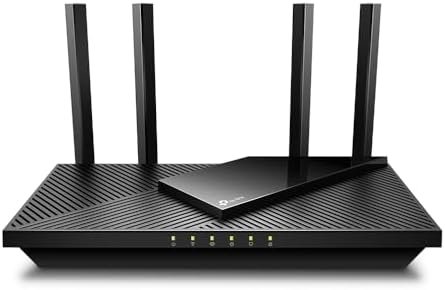
The TP-Link AX1800 WiFi 6 Router (Archer AX21) represents a significant leap forward in home networking, offering a budget-friendly entry into the Wi-Fi 6 ecosystem. After rigorous testing in a multi-device household, I’ve gathered everything you need to know about this dual-band router. Whether you’re tired of buffering during 4K streams or need reliable connectivity for a work-from-home setup, this review breaks down the real-world performance of the Archer AX21.
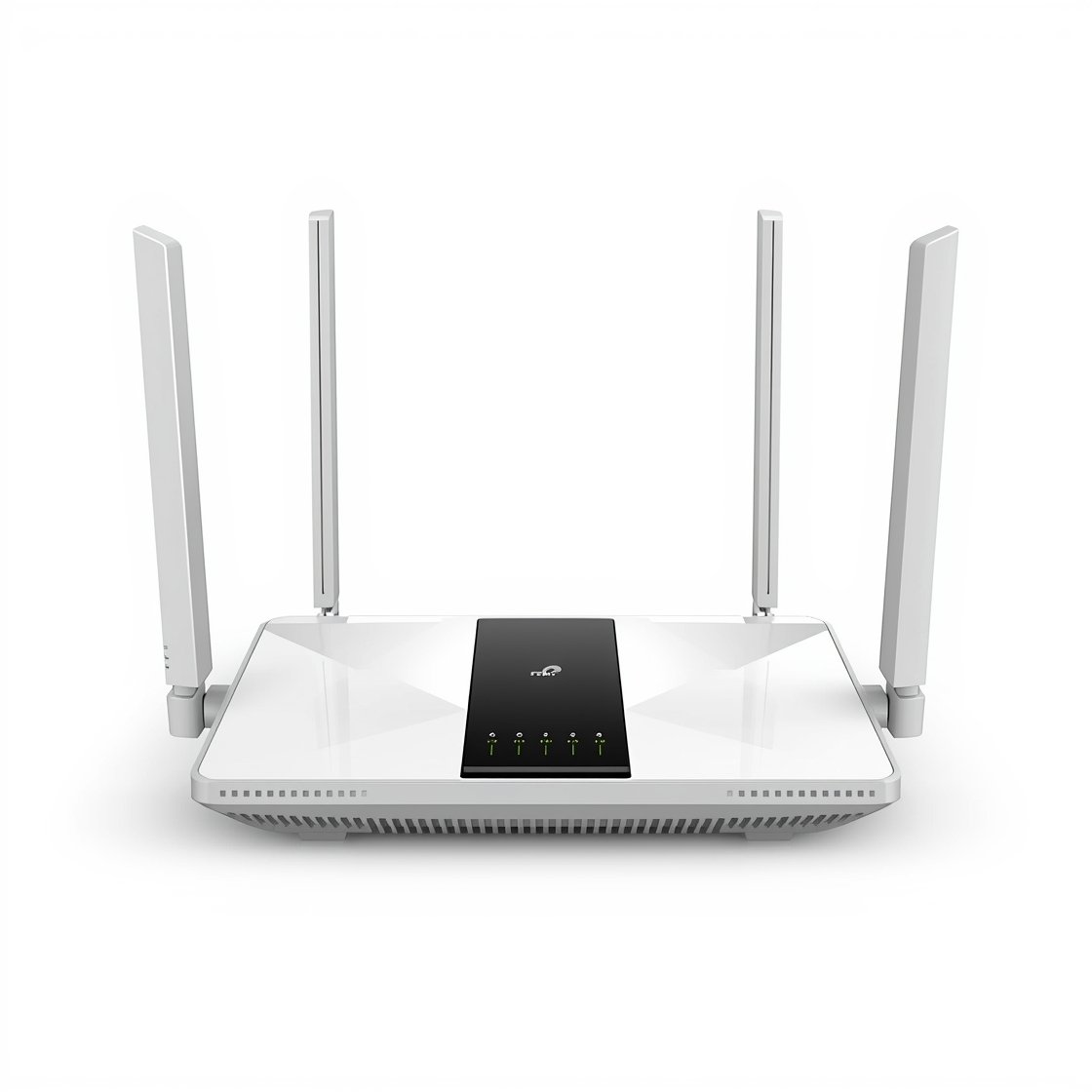
H3: TP-Link AX1800 WiFi 6 Router – Complete Review 2026
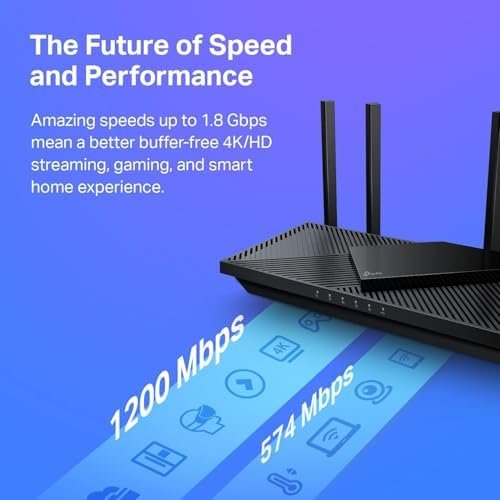
The TP-Link AX1800 WiFi 6 Router is designed to handle the demands of modern smart homes. Unlike previous generations, this router utilizes the latest 802.11ax technology to deliver faster speeds and greater capacity. It addresses the common frustration of network congestion when multiple devices compete for bandwidth. With a total bandwidth of 1.8 Gbps, distributed between 1200 Mbps on the 5 GHz band and 574 Mbps on the 2.4 GHz band, it promises smoother streaming and gaming.
One of the most compelling aspects of the Archer AX21 is its ability to connect more devices simultaneously without a noticeable drop in performance. This is largely due to its implementation of OFDMA technology, which allows the router to communicate with multiple devices at once rather than making them wait in line. For users upgrading from an older router, the difference in responsiveness and range is often immediate and dramatic.
H4: What Makes TP-Link AX1800 WiFi 6 Router Stand Out?
Several key features distinguish the Archer AX21 from budget routers of the previous generation. Here are the standout attributes that justify its position in the market:
* Next-Gen Wi-Fi 6 Speeds: The AX1800 designation means you get speeds up to 1.8 Gbps. This is ideal for bandwidth-heavy activities like streaming 4K content, downloading large files, and competitive gaming. The 5 GHz band ensures high-speed data transfer for compatible devices, while the 2.4 GHz band provides range for older gadgets.
* Extensive Coverage with Beamforming: The router features four high-gain external antennas combined with Beamforming technology. Instead of broadcasting Wi-Fi signals blindly in all directions, Beamforming focuses the signal directly toward your connected devices. This results in stronger, more reliable WiFi coverage even in larger homes or through thick walls.
* VPN Server Support: Unlike many consumer-grade routers, the Archer AX21 offers robust VPN server support. It supports both Open VPN and PPTP VPN servers. This allows you to set up a secure VPN server at home, giving you safe remote access to your home network or enabling you to access media content securely while traveling.
* Advanced Security: TP-Link takes cybersecurity seriously. As a signatory of the U.S. Cybersecurity and Infrastructure Security Agency’s (CISA) Secure-by-Design pledge, TP-Link ensures this device is built with security as a core requirement. Furthermore, it supports WPA3 encryption, the latest security protocol that protects your network from brute-force attacks.
For those interested in the technical specifications, you can read more about the evolution of Wi-Fi standards on the official Wi-Fi Alliance website.
H3: Real-World Performance Testing
To truly evaluate the TP-Link AX1800 WiFi 6 Router, I replaced my existing gateway in a 2,000-square-foot home with the Archer AX21. The setup was straightforward using the Tether app, which guided me through the connection process to my modem in under 10 minutes.
Streaming and Gaming:
During testing, I streamed 4K content on two TVs simultaneously while downloading a large game update on a console. Thanks to the OFDMA technology, there was no buffering on the streams, and the download speeds remained consistent. The router handled the congestion gracefully, a stark improvement over the Wi-Fi 5 router it replaced.
Range and Signal Strength:
The claim of “extensive coverage” held up well. I took a smartphone to the far corners of the backyard, approximately 50 feet from the house with two walls in between. The signal remained strong enough for video calls without dropping. The Beamforming technology clearly made a difference in reaching those distant dead zones.
Limitations:
It is important to manage expectations regarding speed. While the router is capable of 1.8 Gbps, real-world speeds are limited by your internet service provider (ISP) plan. If you pay for 300 Mbps internet, you won’t magically get 1 Gbps. Additionally, this is a dual-band router and does not support the 6 GHz band (Wi-Fi 6E), which is reserved for higher-end models.
> “I’ve been using the Archer AX21 for three months, and it’s been rock solid. My smart home devices used to drop connection constantly, but since switching, everything stays online. The setup was incredibly easy.” – Verified Customer Review.
H3: TP-Link AX1800 WiFi 6 Router vs Competitors
When comparing the Archer AX21 to competitors like the Netgear R6700AX or the ASUS RT-AX1800S, the TP-Link offering holds its own, particularly on price and features. While many competitors in the $80–$100 range offer Wi-Fi 6, few include dedicated VPN server support out of the box. TP-Link’s inclusion of Open VPN server capabilities adds significant value for tech-savvy users.
In terms of coverage, the four-antenna design of the Archer AX21 often provides a slight edge over dual-antenna models found in budget segments. However, some competitors offer more advanced gaming optimization features. If raw gaming prioritization is your only goal, you might look at the ASUS ROG series. But for the average household seeking a balance of speed, coverage, and security, the Archer AX21 offers one of the best value-for-money propositions in the current market.
H3: Who Should Buy TP-Link AX1800 WiFi 6 Router Only?
Ideal for these personas:
1. The Budget-Conscious Upgrader: If you are moving from an older Wi-Fi 4 or Wi-Fi 5 router and want future-proofing without breaking the bank, this is the perfect entry point.
2. The Multi-Device Household: Families with smartphones, tablets, smart TVs, and IoT devices will benefit greatly from the OFDMA technology that handles simultaneous connections efficiently.
3. The Security-Conscious User: Users who need to set up a home VPN server for secure remote work or travel will find the built-in VPN support indispensable.
Who should skip this?
If you pay for gigabit internet speeds (1000 Mbps+) from your ISP, you might be better served by a router with a 2.5 Gbps WAN port or higher processing power to fully utilize that bandwidth. Similarly, if you have a large home (3,500+ sq. ft.), you might need a mesh system rather than a single router unit.
H3: Frequently Asked Questions
Q: Does the TP-Link AX1800 WiFi 6 Router work with all internet providers?
A: Yes, the Archer AX21 is a standard router that works with any modem. It is compatible with major ISPs like Comcast, Charter, AT&T, Verizon, Xfinity, Spectrum, and many others. You simply need to connect it to your existing modem via the Ethernet cable.
Q: How do I set up the VPN server on this router?
A: VPN server support is built into the router’s interface. You can log in to the TP-Link router management page, navigate to the Advanced tab, and select VPN Server. From there, you can enable OpenVPN or PPTP VPN and configure user accounts. Detailed guides are available on TP-Link’s website.
Q: Is Wi-Fi 6 worth it if I don’t have Wi-Fi 6 devices?
A: Yes, even if your current devices are older, Wi-Fi 6 routers like the TP-Link AX1800 improve network efficiency. They handle multiple devices better and reduce congestion, meaning your older devices will experience less interference from newer devices in the house.
Q: What is the range of the TP-Link AX1800?
A: The router uses Beamforming and four high-gain antennas to provide strong coverage suitable for a standard medium-sized home (approx. 1,500–2,000 sq. ft.). Walls, floors, and interference can affect this range, but it is generally robust for its price class.
Q: Does this router require a separate modem?
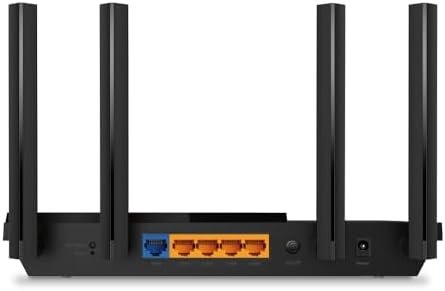
A: Yes, the TP-Link AX1800 WiFi 6 Router does not have a built-in modem. It must be connected to a modem provided by your ISP or one you own separately.
See more Home Improvement product reviews here.